Blog entry by Alžbeta Brnická


Walking in Neolithic Shoes: When History Came to Life in the Classroom
One of the most rewarding moments in teaching history is seeing students genuinely feel the past rather than just memorise it. This lesson on the Neolithic Revolution achieved exactly that by inviting students to imagine what it meant to abandon a nomadic lifestyle and embrace a settled way of life.
From the very beginning, students were intrigued by the unusual premise: they were not just learners of history, but real estate agents in prehistoric times. Their task was to convince a nomadic hunter-gatherer to settle down and invest in land. This simple role-play immediately transformed an abstract historical process into a concrete, relatable challenge.
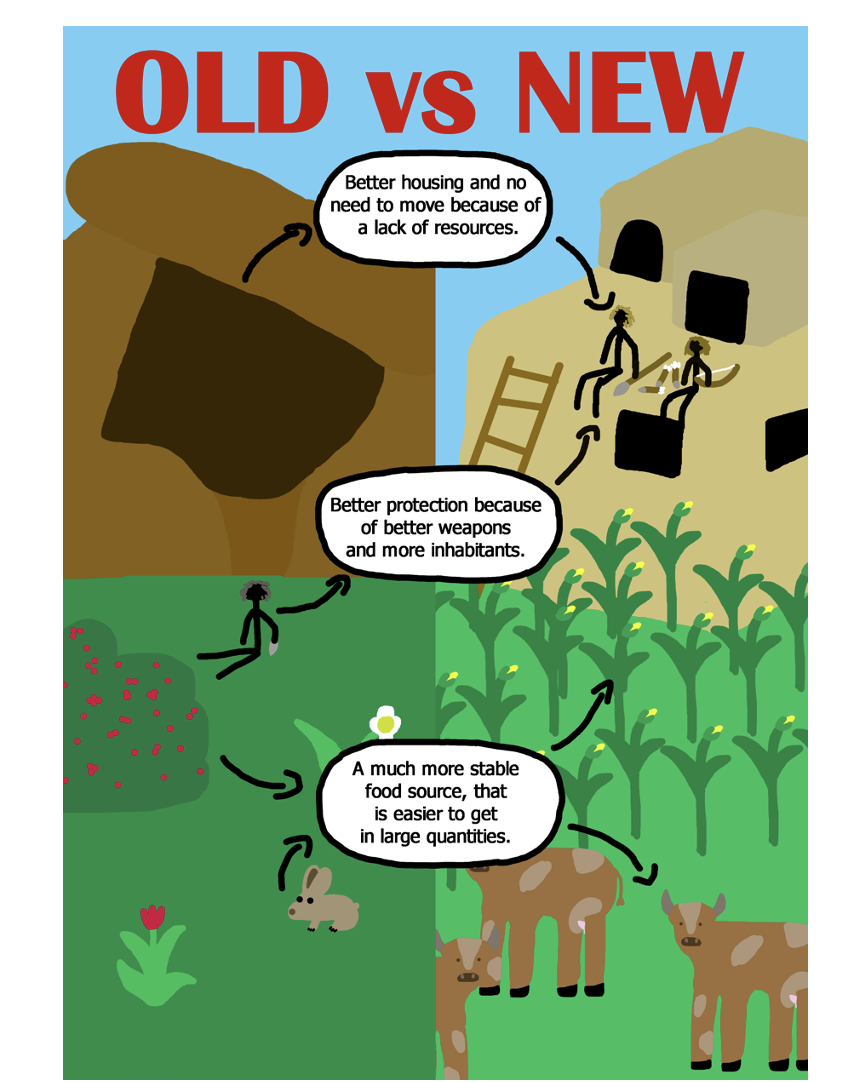
The lesson opened with collaborative reflection. Working in pairs, students compared the positives and negatives of nomadic life with those of early Neolithic communities. As they brainstormed ideas, it became clear how deeply they were thinking about daily survival, mobility, food security, and social organisation. Concepts such as farming, domestication, and permanent shelter were no longer distant textbook terms—they became meaningful advantages and trade-offs to be debated.
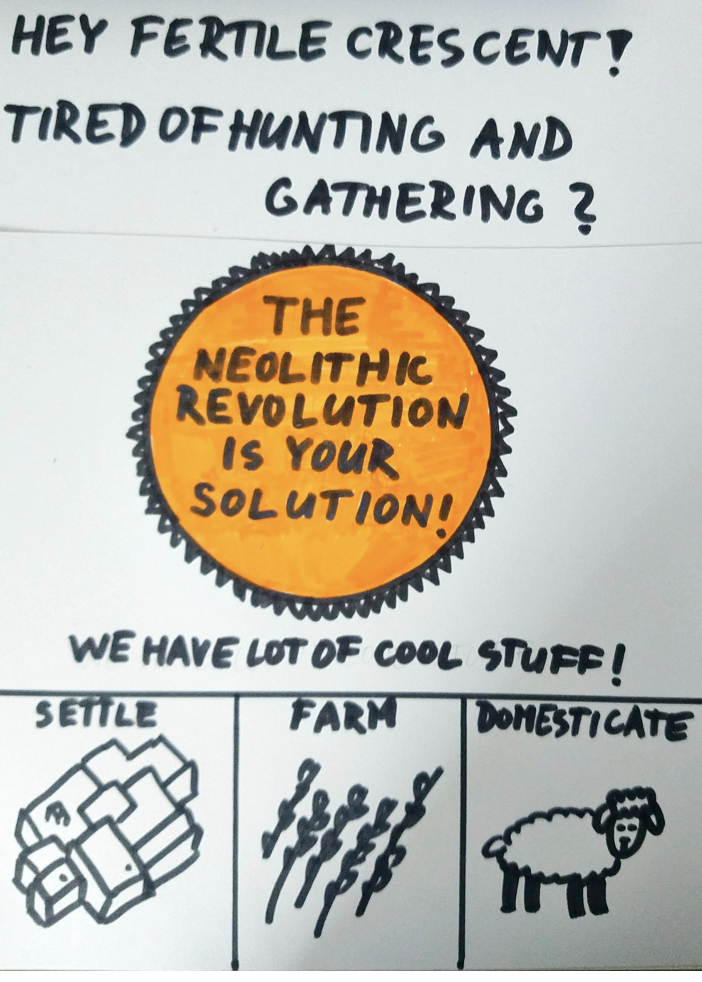
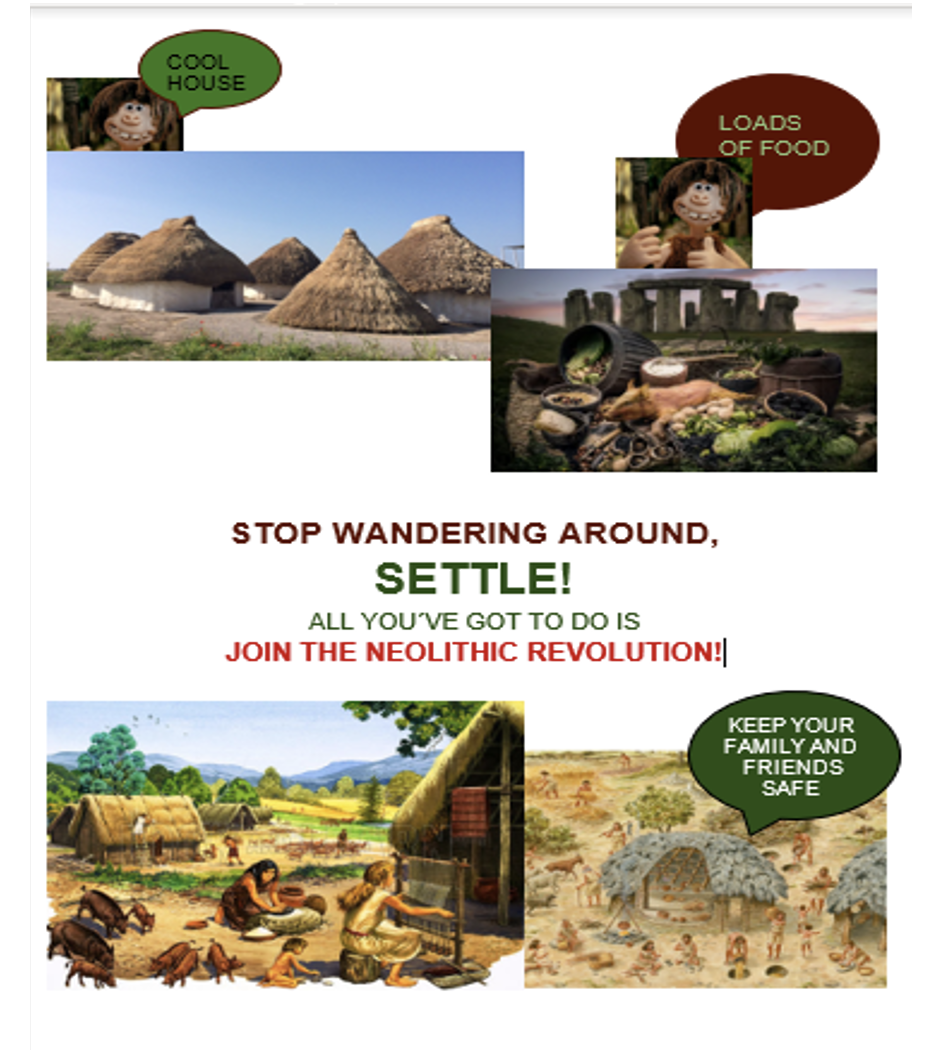
The most engaging part came when students designed their sales pitches and advertising posters. They had to persuade their “prehistoric customer” in under two minutes, using both historical knowledge and persuasive language. Creativity flourished: catchy slogans, bold visuals, and clever arguments filled the classroom. Students critically reflected on how radical the shift to a sedentary lifestyle truly was and how it reshaped society, economy, and culture.
The final presentations brought everything together. Facing an image of a prehistoric man projected at the front of the room, students confidently pitched their visions of a new way of life. Evaluating one another’s work encouraged empathy, critical thinking, and reflection. By the end, the class collectively decided which “real estate agents” had made the most convincing case for settling down.
What made this lesson particularly powerful was how naturally it fostered historical empathy. Students didn’t just learn what changed during the Neolithic Revolution—they explored why those changes mattered and how difficult such a decision might have been for people at the time. By stepping into Neolithic shoes, history became dynamic, human, and unforgettable.
This experience was a strong reminder that when students are invited to actively inhabit the past, history stops being a list of events and starts becoming a story they are eager to tell.